New generation Bosch, read protection, bench/boot methods, necessary tools.
If you work in ECU remapping, sooner or later you'll come across one Bosch MG1 or MD1 ECU that you can't read. They are the new generation of Bosch control units and, since mid-2020, many have a read protection which prevents access to memory using the usual methods.
In this guide we explain what MG1 and MD1 ECUs are, how to identify them, what protections they have, what reading methods exist and what tools are compatible.
🔍 What are Bosch MG1 and MD1 ECUs?
Families MG1 and MD1 They are the generation of control units that Bosch launched to replace the previous ones EDC17 (diesel) and MED17 (gasoline). They are present in most Euro 6d vehicles manufactured from 2018-2019 onwards.
The nomenclature follows this logic:
🔹 MG1 — Control units for engines of gasoline (Gasoline engine, generation 1).
🔹 MD1 — Engine control units diesel (Diesel engine, generation 1).
Following the acronym is a code that identifies the exact model. For example: MG1CS002, MD1CS004, MD1CP014. The letters "CS" usually indicate a standard version, while "CP" usually indicates versions with more features or for premium vehicles.
⚙️ Technical architecture: what's inside
The main difference from the previous generation is the microprocessor. The MG1/MD1 ECUs use two families of MCUs:
🔹 NXP/ST SPC5777 — Power Architecture family processor. It was the first one Bosch used for this generation. It is found in the first versions (2018-2020) of ECUs for VAG, BMW, Mercedes, PSA, and others.
🔹 Infineon AURIX TC2xx / TC3xx — TC275, TC277, TC298, TC299, TC387, TC399 processors. Bosch gradually migrated to Aurix, which offers greater computing power and more memory capacity. The most recent versions (2021+) primarily use Aurix.
Why does it matter what processor it has? Because the reading method and compatible tools They depend directly on the MCU. An MD1CS004 with an SPC5777 is read differently than an MD1CS004 with a TC298.
🔒 "Locked" protection: what changed in 2020?
Until mid-2020, MG1/MD1 ECUs could be read on a bench (direct connection to the ECU connector on a workbench) without major problems. From then on Summer 2020, Bosch implemented a new firmware protection that blocks access to the flash memory by bench in certain versions.
The first ECUs affected were those of BMW and MINI (B38, B48, B58, N47, S55, S63 engines), followed by Mercedes, Kia/Hyundai and some models of BRP (Can-Am). Over time, the protection has been extended to more manufacturers and more variants.
This means that the same ECU reference (for example, MD1CS001) can exist in two versions: one without protection (manufactured before mid-2020) and another with protection (manufactured later). It cannot be told at a glance; it is necessary to attempt to read it to verify it.
📋 Reference table: Most common MG1 and MD1 ECUs
Below are the most common variants you will find in the workshop, organized by manufacturer:
VAG Group (VW, Audi, Seat, Skoda, Cupra):
🔸 MG1CS001 — TSI gasoline (Golf, A3, León). MCU: SPC5777.
🔸 MG1CS002 — TSI gasoline (A4, A5, Passat). MCU: SPC5777/TC298.
🔸 MG1CS008 — TSI gasoline. MCU: SPC5777/TC298.
🔸 MG1CS011 — TSI gasoline (Golf 8, Octavia IV). MCU: SPC5777/TC298.
🔸 MG1CS111 — TSI gasoline. MCU: SPC5777.
🔸 MD1CS004 — TDI Diesel (Golf 8, A4, Octavia). MCU: TC298.
🔸 MD1CP004 — Diesel TDI (premium versions). MCU: SPC5777 / TC298.
🔸 MD1CP014 — TDI Diesel. MCU: SPC5777/TC298.
BMW / MINI:
🔸 MD1CP002 — Diesel (B47, Series 1/3/5). MCU: SPC5777.
🔸 MD1CP032 — Diesel (B47, recent models). MCU: TC299.
🔸 MD1CS001 — Diesel (B47/N47). MCU: SPC5777/TC298.
🔸 MG1CS003 — Gasoline (B48, Series 1/3/X1). MCU: SPC5777.
🔸 MG1CS024 — Gasoline (B48, recent models). MCU: TC298.
🔸 MG1CS201 — Gasoline (B48/B58, 2021+ models). MCU: TC298.
Mercedes-Benz:
🔸 MG1CP001 — Gasoline (M260/M264). MCU: SPC5777.
🔸 MG1CP002 — Gasoline (M256). MCU: SPC5777.
🔸 MD1CP001 — Diesel (OM654). MCU: SPC5777.
Ford:
🔸 MD1CS005 — EcoBlue Diesel. MCU: TC298.
🔸 MD1CS025 — EcoBlue Diesel (2021+). MCU: TC387.
🔸 MG1CS040 — EcoBoost Gasoline. MCU: TC399.
🔸 MG1CS060 — EcoBoost Gasoline. MCU: TC387.
PSA (Peugeot, Citroën, DS, Opel):
🔸 MD1CS003 — BlueHDi Diesel. MCU: TC298.
🔸 MG1CS042 — PureTech Gasoline. MCU: TC298.
Renault / Nissan:
🔸 MD1CS006 — Blue dCi Diesel. MCU: TC298.
Hyundai/Kia:
🔸 MD1CS012 — CRDi Diesel. MCU: TC298.
🛠️ Reading methods: Bench, Boot and OBD
There are three ways to access the memory of an MG1/MD1 ECU:
📌 Bench reading (table)
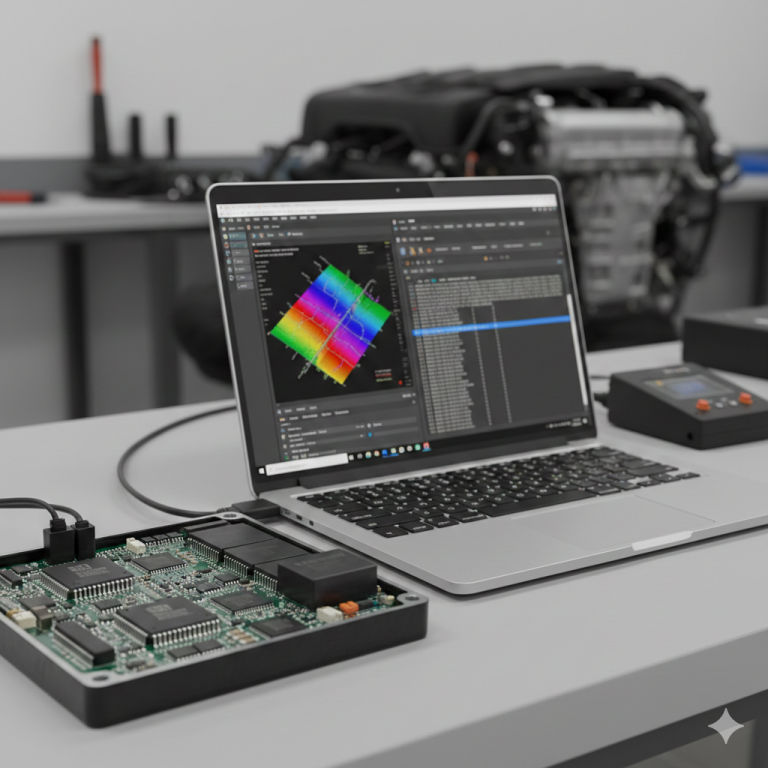
The tool connects directly to the ECU connector, without needing to open the housing. This is the fastest and safest method when the ECU is not protected. For versions locked (2020+), Many tools cannot read by benchmark. Some solutions such as Autotuner They offer a "Remote Unlock" or "Mail-in Unlock" service: you send the ECU, they physically unlock it and return it to you ready to read and write.
📌 Boot Reading
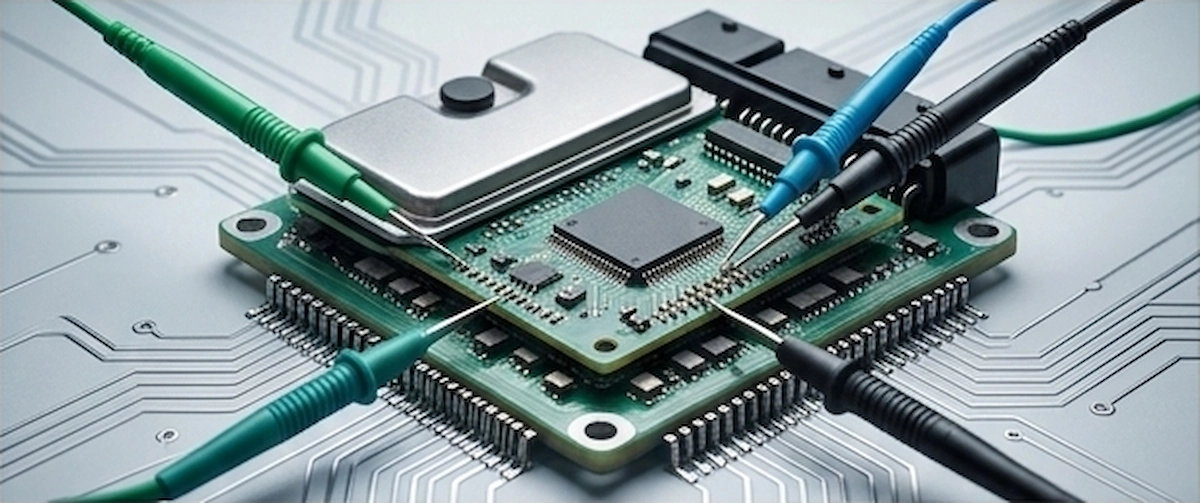
It requires open ECU and connect directly to the test points on the electronic board. It's more invasive and carries risks if not done correctly, but it allows access to protected ECUs. Each ECU model has a different boot pinout.
📌 OBD Reading (Virtual Read)
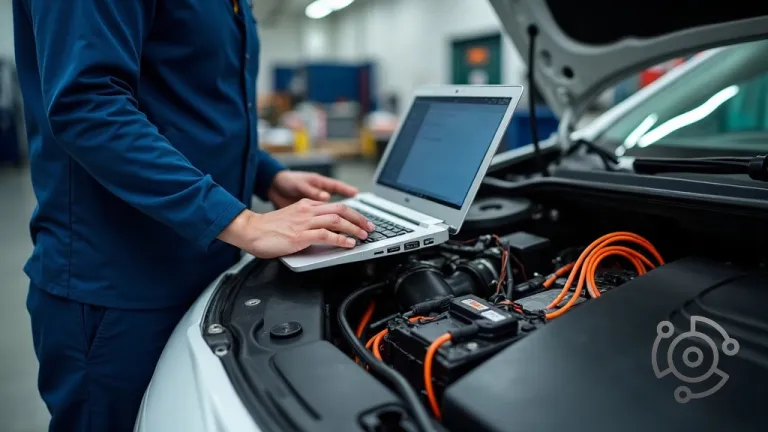
It is read through the vehicle diagnostic connector, without disassembling or opening anything. It's the most convenient method, but it doesn't always provide a complete flash reading. Tools such as Alientech KESS3 They offer what's called "Virtual Read" (VR): instead of reading the ECU's actual memory, the tool identifies the software version and downloads the original file from the Alientech database. This allows modifications to be written without needing to read the entire flash memory.
⚠️ Important fact: Some hardware versions (such as the MD1CS004 with VAG H80 hardware) They can only be managed via OBD, since even bench mode is not available.
🔧 Tools compatible with MG1/MD1
Not all tools on the market support the new generation. This is the current status of the main ones:
Alientech KESS3: It supports OBD (Virtual Read) and bench/boot read and write for many MG1/MD1 variants from VAG, BMW, Ford, PSA, and more. It's the tool with the broadest OBD coverage for this generation. It's frequently updated with new protocols.
Autotuner: It supports benchmarking and OBD. For locked BMW ECUs (2020+), it offers a "Mail-in Unlock" service: you send in the ECU and it's returned unlocked for benchmarking and OBD readings. Good coverage of VAG and BMW.
Magic Motorsport Flex: It supports benching and booting for multiple MG1/MD1 variants. It is updated periodically with new protocols.
CMD Flash (Flashtec): It supports benchmarking for variants with SPC5777 and some Aurix chips. Its support is increasing.
BitBox (Scanmatik SM2/SM3): Universal bench module for MG1/MD1 with SPC5777 and Aurix. It does not support locked ECUs (2020+) with the standard module, but it has specific Gen2 modules for Ford and others that include protected versions (requires SM3).
ECUHelp ECU Bench Tool: A more economical tool that supports benchmarking for MG1/MD1, both SPC5777 and TC2xx. It does not support versions with the new protection.
PCMFlash (Scanmatik): Supports bench and OBD for multiple variants.
❓ How to tell if your ECU is locked?
There's no visual way to know. The process is:
1️⃣ Identify the exact reference — Look at the ECU label. Look for the model (e.g., MD1CS001), the hardware number (e.g., H80), and the manufacturing date.
2️⃣ Check the date — If it was manufactured after mid-2020, there is a high probability that it has protection.
3️⃣ Try the bench read — Connect the tool in bench mode. If the reading fails or the tool indicates "ECU locked" or "bench protection detected", you confirm that it is protected.
4️⃣ OBD test Many ECUs locked in bench mode can be managed via OBD with Virtual Read. Tools like KESS3 automatically indicate whether the OBD protocol is available for that variant.
💡 Practical tips for the workshop
✅ Always identify before promising — Before accepting a job on a 2019+ vehicle, do a quick ECU identification to determine if it's an MG1/MD1 and if it's locked. This prevents surprises for the customer.
✅ Have more than one tool No single tool covers the 100% variants. Having a KESS3 for OBD and a benchmark tool like Autotuner or Flex expands your coverage.
✅ Keep your tools up to date — Tool manufacturers release frequent updates with new protocols for MG1/MD1. An ECU that you couldn't read 6 months ago may be compatible today.
✅ Work with a file provider that is familiar with these ECUs. Not all file providers have experience with MG1/MD1. Make sure your provider supports the exact variant and type of read you performed.
🏁 Conclusion
Bosch MG1 and MD1 ECUs represent the present and future of ECU remapping. Their adoption is widespread across all European and Asian manufacturers, and more and more vehicles with this technology are arriving at workshops. Mastering their identification, knowing the compatible tools, and understanding the available reading methods is essential for any chiptuning professional.
In EcuTracer We support the modification of MG1 and MD1 ECU files for all services: Stage 1, Stage 2, DPF, EGR, AdBlue, DTCs, and more. We deliver in less than 1 hour, with direct support via WhatsApp.
👉 Register as a professional And it starts without a subscription or fee, paying only per file.