In the world of chiptuning, The checksum is one of the most critical and, at the same time, most misunderstood elements. Every time we modify an ECU file, we are altering data that the control unit constantly validates.
If the checksum is incorrect ⚠️ → the ECU detects that the software has changed.
Possible result: does not start, protection mode or internal errors.
This article explains clearly and technically:
✅ What is a checksum?
✅ How it works
✅ How machines calculate it
✅ What to do when it doesn't correct itself automatically
🧠 What is a checksum?
The checksum is a mathematical verification value which allows the ECU to verify that the memory data is not corrupted or incorrectly modified.
Simplified:
1️⃣ The ECU processes a block of memory with an algorithm
2️⃣ Save the result in a specific area
3️⃣ Every time it starts, it recalculates and compares.
If it doesn't match ❌ → integrity error.
It's basically the "quality control" of the software.

⚙️ How it works internally
The ECU memory is divided into blocks and each one can have its own checksum.
Typical architecture:
🔹 Checksums per block
🔹 Global checksums
🔹 Hierarchical checksums
🔹 Separate code validation and calibration
Common algorithms:
- ➕ Simple summations
- 🔁 CRC16 / CRC32
- 🔐 Proprietary Algorithms
- 🧩 Systems with seed/key
Modern ECUs may have dozens or hundreds of checksums.
That's why modifying a single table can require recalculating many.
🤖 How do machines calculate the checksum?
Programming tools don't "calculate everything".
What they do is use ECU algorithm libraries and software.
Typical process:
1️⃣ Identify the ECU and SW version
2️⃣ They are looking for a compatible algorithm
3️⃣ Recalculate the necessary blocks
4️⃣ They write the corrected file
👉 If the ECU is not supported → there is no automatic checksum.
This explains why many new ECUs fail.

🚨 What happens if the checksum is incorrect
Possible symptoms:
❌ Vehicle won't start
🌪 Fans at maximum speed
⚠️ Software Integrity DTC
🐢 Protection mode
🔒 Write lock
💣 ECU Brick
On modern platforms, tamper protection can be activated.
🛠️ What to do when the machine does not calculate the checksum
Career options:
✅ Advanced software
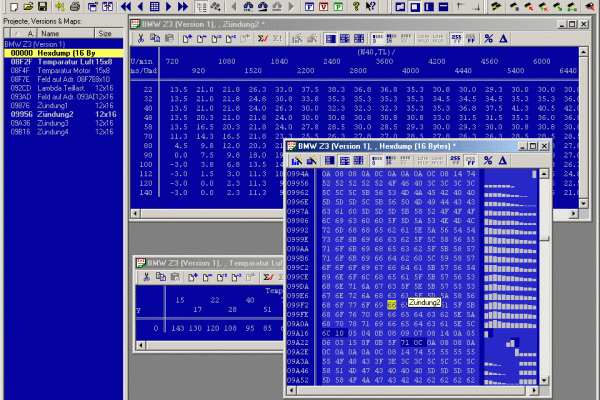
Use of professional editing with WinOLs and scripts.
✅ Manual correction
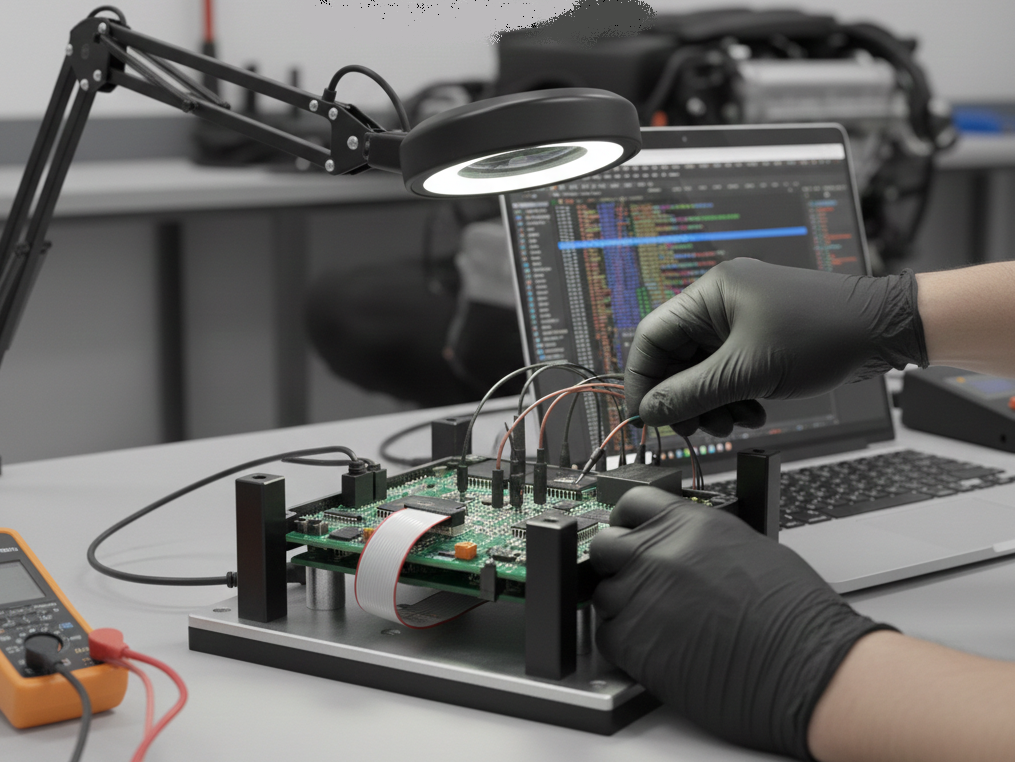
Compare checksum zones with another file from the same software.
Experience required.
✅ Patch or bypass
Some ECUs allow:
- Partial writing
- Patch via RAM
- Disable validation
Not always recommended.
✅ External service
Very common in new ECUs:
- Algorithm development
- Custom scripts
- Manual correction
💡 Technical information that makes the difference
✔ Not all checksums are in flash.
They can also be in EEPROM or micro.
✔ Dynamic checksums exist
They are recalculated in real time.
✔ They protect calibration and code
Increasingly common.
✔ They are the basis of anti-tuning systems
Especially in modern ECUs.
✅ Good professional practices
📦 Always keep the original
🔍 Verify checksum before writing
🧪 Test new ECUs on a test bench
🗂 Document software versions
🧠 Do not edit outside of reliable definitions
🎯 Conclusion
The checksum is not a minor technical detail: it is the basis of ECU software integrity.
Mastering it allows you to:
🚀 Working with new ECUs
🛡 Avoid bricks
🔬 Solve cases where the machine fails
🏆 Differentiating a basic service from a professional one
In advanced chiptuning, understanding the checksum is mandatory.